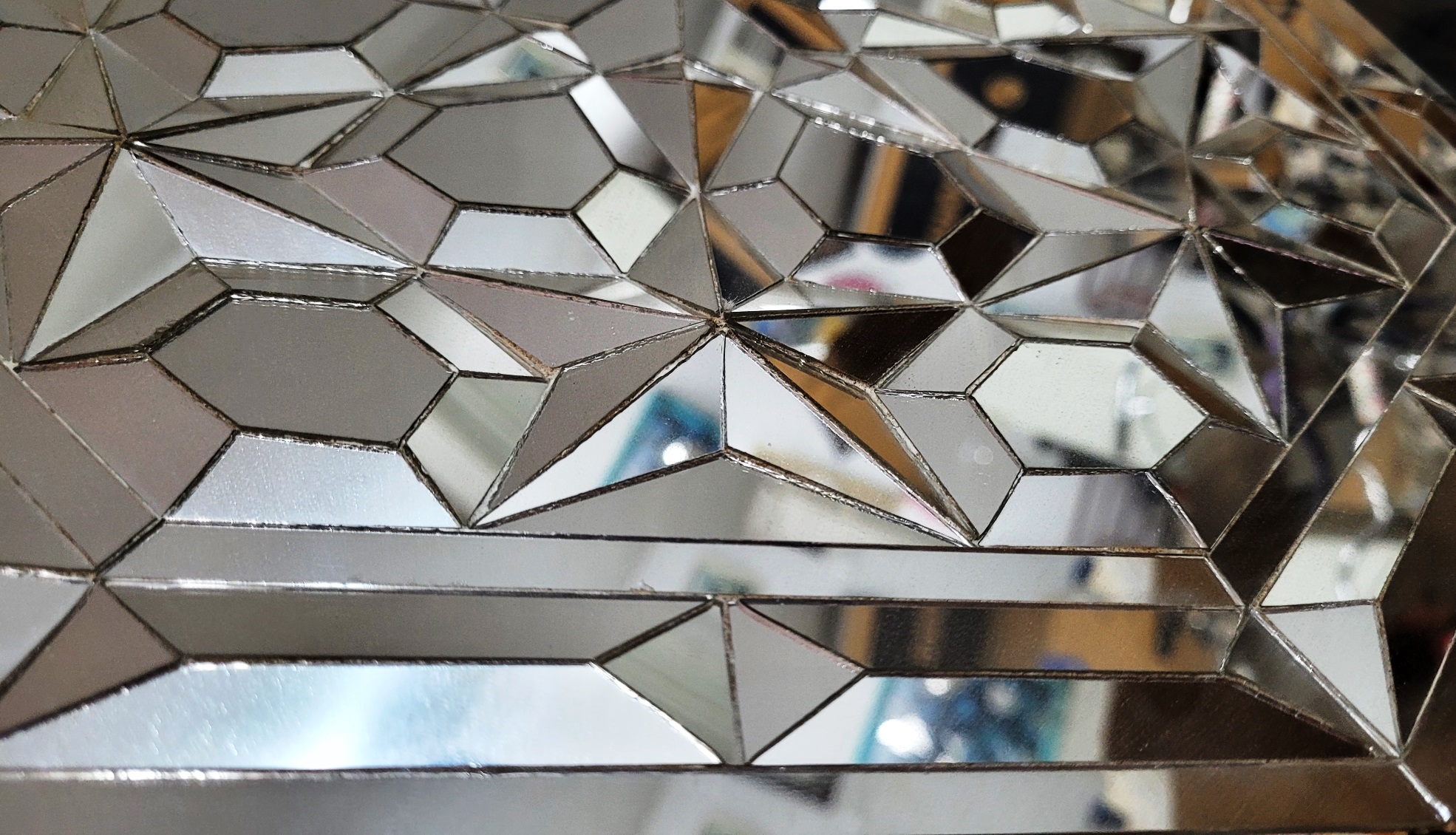
In 2025, “Ayeneh-Kari, the art of mirror-work in Persian architecture” was inscribed on UNESCO’s Representative List of the Intangible Cultural Heritage of Humanity.
The decision was adopted by the Intergovernmental Committee for the Safeguarding of the Intangible Cultural Heritage during its twentieth session in New Delhi. It identifies Ayeneh-Kari as a handcrafted practice applied to architectural surfaces including walls, ceilings, domes, columns, and panels.
The UNESCO record describes a practice that brings together design, mirror cutting and shaping, plasterwork, painting, and mosaic work. Its knowledge is transmitted informally through families, workshops, and apprenticeships, and formally through universities and training institutes.
The significance of the inscription lies in its recognition of Iranian mirrorwork as a continuing body of knowledge rather than only a feature of historical buildings. The record connects its survival to practitioners, teaching, restoration, and its continued use in new architectural work.
For this archive, the inscription marks a contemporary point in the public history of Iranian mirrorwork and provides an institutional reference for future documentation of its practitioners, transmission, conservation, and development.
Primary sources