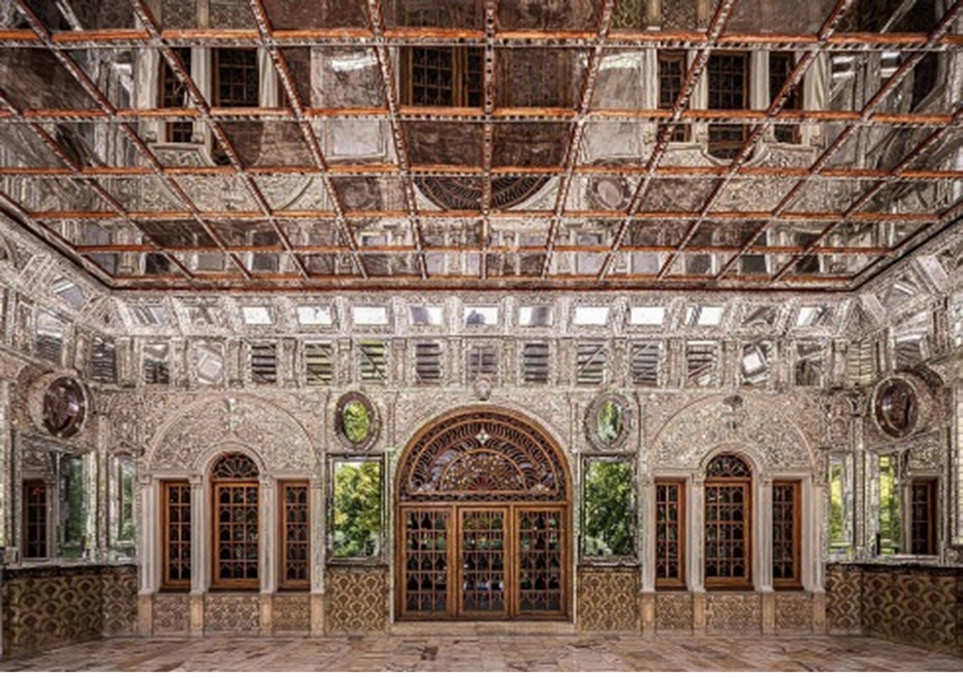
Alireza Sheykhi’s study offers one of the most extensive recent typologies of Iranian mirrorwork.
Drawing on field documentation of forty-seven residential, royal, and religious buildings in Isfahan, Tehran, Shiraz, and Mashhad, alongside historical travelogues and written sources, the article traces mirrorwork methods from the Safavid period to the contemporary era.
The study identifies seventeen methods: four documented in Safavid works, ten associated with Qajar and Pahlavi practice, and three contemporary developments. Its particular value lies in the technical vocabulary it establishes for comparing methods across periods and buildings, supported by field photographs and observations informed by the author’s long experience in the craft.
For this archive, the article is introduced as a technical and historical resource. Its classifications, dates, examples, and field records provide a substantial basis for further research into the development of Iranian mirrorwork.